Skip to content

Stephen Antoni · Software engineer

Trading Infrastructure & Quantitative Systems Engineering

Automated strategy development, quantitative research and backtesting. Alpha Lab, my modular research platform, focuses on the path from market data to strategy evaluation; its backtest-to-live architecture is in development.

Financial Infrastructure for Custody, Deposits & Signing

Custody services in Go and Rust, where a bug moves real money: one stable interface across more than ten protocols, layered validation before MPC signing, and deposits matched against the ledger.

Multi-Chain Wallet Service · request flow

Deposits are indexed incrementally; withdrawals pass validation and MPC signing before they are broadcast. More on the wallet service

01Platform

Alpha Lab

Alpha Lab is my modular trading research platform, focused on the path from market data to strategy evaluation. The work spans data acquisition, strategy and indicator tooling, and custom backtesting, with backtest-to-live architecture under development.

01Market Data

Problem solved

Historical data arrives from different providers in different shapes. Research needs one consistent data contract before any result built on it can be trusted.

Approach

  • Provider adapters map every source onto one bar contract: instrument, timeframe, UTC timestamps, OHLCV.
  • Gaps are detected and reported as missing intervals, never silently filled.
  • Re-importing the same range yields the same dataset, so downstream runs stay reproducible.

Tech stack

  • Go
  • DuckDB

02Research

Research Approaches

Four ways a market question becomes testable work. Each answers the same five questions, so they compare side by side.

Study price, trend, momentum, and volatility to turn market hypotheses into testable signals.

01 · Input

OHLCV and price data available at decision time.

02 · Method

Trend, momentum, volatility and mean reversion; for example returns, rolling z-score, ATR.

03 · Output

Explicit features and signal rules with versioned parameters.

04 · Validation

Baseline comparison, out-of-sample testing, sensitivity, regime analysis, transaction costs.

05 · Limits

Parameters overfit. Patterns shift across regimes. Every feature must be causal.

03Selected systems

Production systems, shown in context.

Eight case studies across custody, signing, contracts, quant research, machine learning, execution, and mining operations.

Coverage

  1. 01Custody and wallet infrastructure
  2. 02Quant research and execution systems
  3. 03Smart-contract and signing controls
  4. 04Mining operations and thermal controls

Notable works

001Go / Shamir / gRPC / Web3 / NodeJS

Multi-Chain Wallet Service

Custodial wallet service for multi-chain deposits, pooled wallets, and outgoing transfers, built with stable APIs and layered signing controls.

Evidence

  • Incremental blockchain indexing for reliable deposit detection.
  • Custodial wallet pooling with sharded wallet generation through MPC.
  • Multi-party signing for withdrawals with validation before broadcast.
  • Stable wallet interfaces such as balance, address creation, deposit listing, address validation, and transfer.
  • Adapter model that can support more than ten protocol integrations without changing upstream callers.

ArchitectureSystem diagram

readswritesapprovedindexed stateCustomer request: The user or customer interacts with the custodial service, not directly with wallet internals.Customer requestCustodial server: The server owns product-facing requests and calls stable wallet interfaces.Custodial serverWallet service: A durable Go service routes balance, address, deposit, and transfer operations.Wallet serviceChain adapter layer: Protocol adapters normalize chain-specific indexing, address rules, fees, and broadcast behavior.Chain adapter layerValidation service: Transfer requests pass business, risk, and security checks before any signature is released.ValidationserviceSigning service (MPC): Multi-party signing and MPC-backed shards produce a signed transaction without weakening custody controls.Signing service (MPC)Blockchain broadcast: The wallet broadcasts signed transactions and indexes final chain state back into custody records.Blockchain broadcast

Approach

Hexagonal Architecture

The domain core stays apart from the systems it talks to, and the boundary between them decides where a change belongs. That matters most when an LLM helps write the change.

Inbound adapters · call the core

Data provider

Broker / exchange

Database / storage

Outbound adapters · implement a port

Outbound port

Market Data

What the core needs: bars and quotes for an instrument. Data provider adapters implement it: Twelve Data, Bento and Binance. One is wired in at a time; swapping it changes one adapter, while the port and the core stay as they are.

Select the core, a port or an adapter to trace its connections. Example: an LLM-assisted change adds a data provider. It lands in one adapter behind the existing Market Data port, and the core does not change, so review covers one adapter and its contract tests. The adapter names are examples that explain the architecture, not a list of implemented integrations.
  1. 01

    Boundaries as guardrails

    Before an LLM drafts a change, the task is scoped to one side of a boundary: one adapter, or one port and the adapters behind it. That limits the blast radius, gives the implementation a clear target, and makes anything outside the scope stand out in review.

  2. 02

    Ports and adapters

    A port is a contract at the boundary: what the core needs from the outside, such as market data or order submission, or what it offers, such as commands. An adapter connects one integration to a port. Outbound adapters, such as a data provider, a broker or exchange, or a database, implement the port the core calls, and several can implement the same port; inbound adapters, such as an HTTP API, a CLI or an MCP server, call a port the core offers. A new provider means a new adapter; new behaviour starts as a change to a port.

  3. 03

    Review still decides

    Boundaries narrow what a change can touch. They do not make it safe or correct: contract tests, review and validation still decide whether it ships.

04Products · ChartSentry

Shipped MT5 tools

Indicators built with the same discipline and sold under my product brand. Every object is stamped on a closed bar and never rewritten.

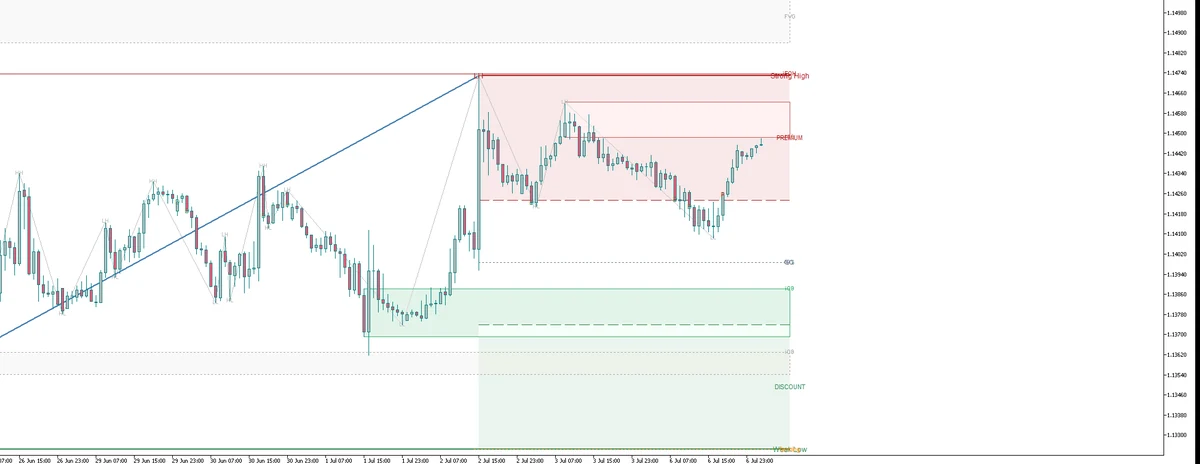
TrueSMC on a EURUSD one-hour chart: premium and discount zones, order blocks and structure levels drawn on closed bars.

TrueSMC

A five-module smart-money suite for MT5: market structure, order blocks, fair value gaps, liquidity and premium/discount zones from one engine.

StackMQL5 on MetaTrader 5

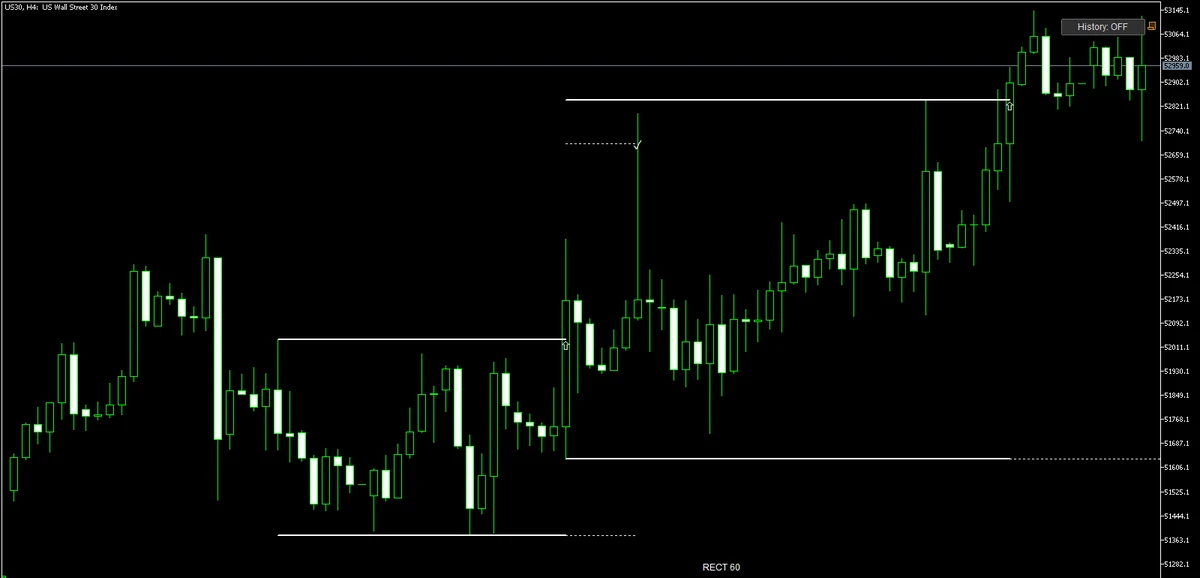
Pattern Sentinel on a US30 four-hour chart: two rectangle patterns with their breakout levels, and resolved calls kept on the chart.

Pattern Sentinel

The core 12 classical chart patterns, quality-scored, with every resolved call kept on the chart as a permanent track record.

StackMQL5 on MetaTrader 5

05About & contact

Work with me

I work at the intersection of trading and software engineering. I have traded hands-on since 2007, so the systems I build start from how a strategy actually runs: what data exists at decision time, what costs and fills look like, and what fails first in a live session.

I have also worked as a backend engineer at Jagad, since 2024, on smart contracts and swap APIs, and at Tokenomy, from 2021 to 2023, on node middleware, wallet operations and asset accounting for a crypto exchange. In 2019 I built neural-network and reinforcement-learning systems for trading on contract.

Focus

Trading systems first: market data, strategy tooling, backtesting and automation, with Alpha Lab as my current platform. Markets traded hands-on: forex, commodities, equities and crypto.

Work that fits

Two kinds of engagement, for traders, teams and funds.

Engagement 01

End to end

Trading system build

From market data to execution: data contracts, strategy logic, backtesting with realistic costs, and a measured path to live trading.

Typical shape

DiscoveryMilestone buildsPaper tradingLive, monitored
What you get
  • An architecture and data contract you review before any code.
  • A working pipeline on your markets and your data.
  • Backtest reports that state every assumption, costs included.
  • A paper-trading phase before live, with parity checks.

Engagement 02

Your rules, automated

Strategy automation

Turn a rule-based or discretionary strategy into a system that behaves the same way every session: rules made explicit, tested out of sample, then automated.

Typical shape

Rule specBacktestAutomationReview
What you get
  • A written rule spec you approve before any code.
  • A backtest with costs and an out-of-sample period.
  • Automation on MetaTrader, Python or a broker API.
  • Decision logs, so every trade can be reviewed.

Contact

[email protected]

Hiring for a trading systems or core platform role? Skip the booking: email or LinkedIn reaches me directly.

Consultation

Book a 30-minute call

We cover your strategy or system, the data it needs, and what a first milestone looks like.

  1. 1 · Scope
  2. 2 · Time
  3. 3 · Details

What should the call cover?

What do you need?
Where are you starting from?
Timeline (optional)